
Perusing Patrick White
Or why you should read what you like and ignore what the snobs think

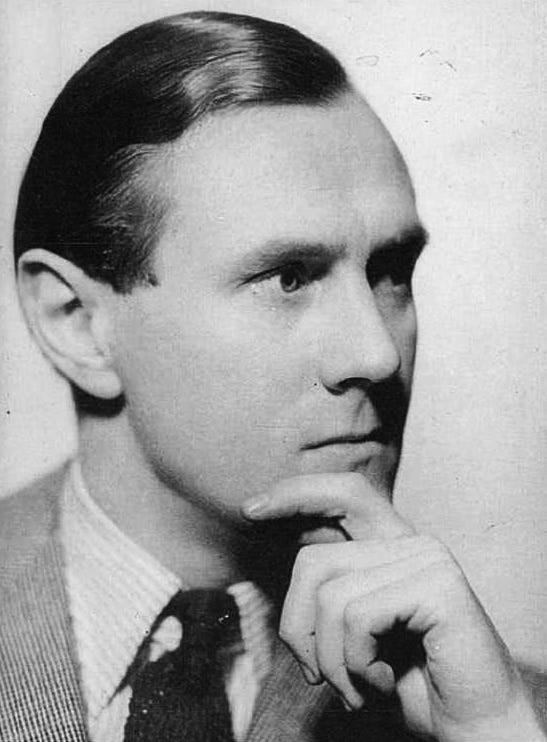
Patrick White is one of those writers that people really don’t seem to read anymore. (What happened to Norman Mailer, too?)
I remember a friend coming up when I was reading Voss. He saw the cover, and observed that he always felt White was a bit too hard to read.
His novels were once the favoured plaything of the Australian intelligensia. People who thought themselves serious and brooding would sit on railway benches, wrestling with Voss, and turtlenecked undergrads would spend their holidays in the depths of The Aunt’s Story or The Tree of Man. Walking into my local second-hand bookshop, White has been relegated to the side, gathering dust and losing readers. I think that’s a colossal shame. White himself proclaimed that
I’m a dated novelist, whom hardly anyone reads, or if they do, most of them don’t understand what I am on about.”
There is, of course, a lot of very good reasons why no one reads his books anymore. They’re hard going: A.D. Hope, that anachronistic interloper, dismissed Voss as “illiterate verbal sludge.” White’s novels are difficult, though they’re not impenetrable and they’re certainly far easier than many other modernists. People still read Faulkner and Joyce in droves, and both those authors are far more difficult to get through than White.
It’s true that he was also an unpalatable personage: Paddy had no problems shattering decades-old friendships over cooking, and he was probably the most perpetually snobbish and class-bound writer Australia’s ever produced. Here is a man who dismissed Australians as “magazine readers,” and whose English accent sailed over the ABC airwaves as he condemned what he thought of as an anti-intellectual nation that never quite rose to the level of Europe.
Its unsurprising, then, that an Australia that sees itself (perhaps short-sightedly) as a classless, sports-obsessed place, never really warmed to White’s prose.
So, why read White?
The easiest answer to give is that he’s just an excellent writer. He writes an excellent character, and is a satirist of the highest order.
Though his novels often seem serious to a fault, White in fact produces wonderfully comedic character studies.
His characters are hilarious. There’s Johann Voss, the perfect critique of the arrogant explorer who calls himself the “Saviour,” hovering around the desert like a madman with a self-Deifying hubris. There’s Arnold Wyburd, the sycophantic, social-climbing lawyer who fancied himself “a bit more than the solicitor.” Who could forget, of course, Theodora Goodman, the amateur aristocrat who spent her last days denying her Australianness in a provincial French hotel?
The power of much of White’s fiction comes from these characters and others like them. He was a master of writing characters full of small details, always dousing his criticism in lashings of satirical humour.
His language, too, is simply excellent. White wrote in a beautiful, high-modernist prose infused with layers of metaphysical meaning and deep imagery. For some a tree is but a tree, yet for White it is a “montonous ugly scarecrow.” Sydney’s Parramatta Road became “syrupy and almost benign.” White is a prose stylist of the first rank, whose representation of nature is simply divine. Johann Voss was not travelling through a simple desert, but a “gelatinous, half-created world” of “grey, miserable, but living trees.”
It is in this world, this parallel plane of existence, where relationships and the troubles of one person’s mind are allowed to be a part of the landscape, as important as the trees and rivers, where one learns again why White deserves to be read. His writing is just beautiful.
His novels might seem complex, and they certainly look at deeply complex issues of how people relate to each other and of social class. Even so, much of the beauty in his work comes from its simplicity:
Two people build a farmhouse and create a life. (The Tree of Man)
A man goes into the desert. (Voss)
A couple watch traffic go by on their street. (Five-Twenty)
These are fundamentally simple plotlines, and yet through his talent, his characters and the incredible strength of his writing, White produced some of the most incredible novels ever written. They’re on par with Virginia Woolf and Tolstoy, and yet they are unfairly overlooked, and often out of print. That is a travesty.
Read Patrick White, if only for my sake.